
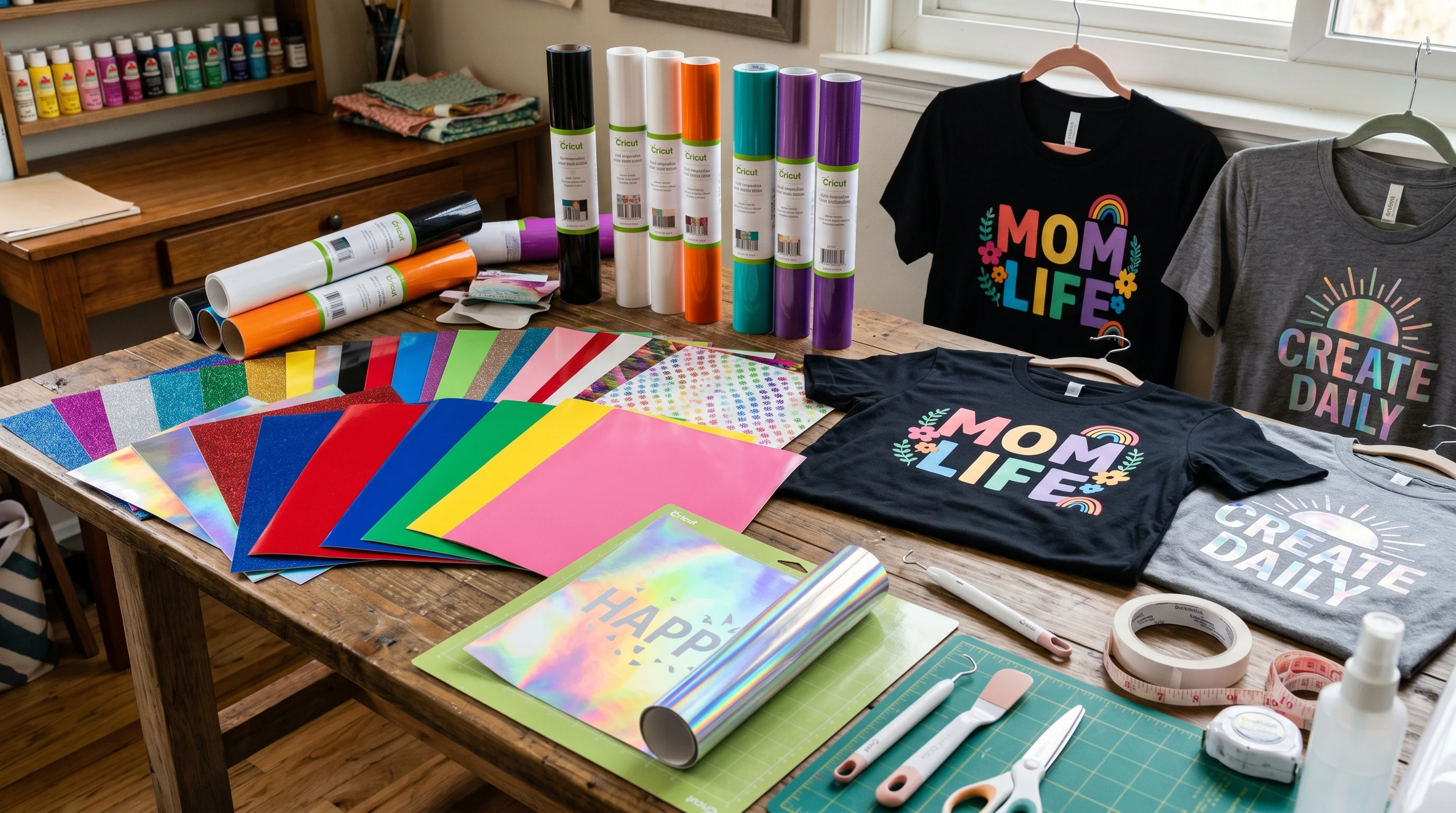
Creating a custom shirt at home or in your crafting space is really rewarding. Choosing the right type of heat transfer vinyl, often called HTV, makes a big difference in how your shirt turns out. There are lots of vinyl options out there, each with its own unique qualities. It can feel overwhelming if you’re new to this, but with the right info, you can pick the best vinyl for your project with confidence.
In this guide, I break down the key things you should know before choosing heat transfer vinyl for shirts, from understanding your exact needs to tips for getting better results. With these insights, you’ll feel better equipped when shopping for vinyl, whether your project is just for fun, a thoughtful gift, or even for a small business.
Know Your Project Goals & Shirt Material
The first thing I consider when picking vinyl for a shirt project is what I’m really looking to do. Shirt fabric, how the shirt is worn, and even the end wearer all matter. Certain vinyl types work best for cotton, while others do better on blends or performance fabrics like polyester.
Questions I Ask Before Getting Started:
- What is the shirt material? (Cotton, polyester, triblend, etc.)
- Will the shirt need to stretch?
- Is the shirt for regular wear, kids’ play, or just special occasions?
- Do I want special effects like glitter or metallic finishes?
- What’s the shirt color?
- Do I need multiple colors or layering?
Thinking through these questions helps narrow down which vinyl to use. It also prevents mistakes, such as designs peeling or vinyl not sticking the way you want.
Understand the Main Types of Heat Transfer Vinyl
Heat transfer vinyl comes in several main types. Knowing the most familiar ones helps me compare them quickly for my specific needs.
Standard (Smooth) HTV
This is my go-to for basic shirts. It offers a smooth, matte finish and works well on most T-shirts, especially cotton or cotton blends. Standard HTV cuts easily and presses quickly whether I’m using a household iron or a heat press.
Stretch HTV
Stretch HTV is made for athletic wear and fabrics that need to move, like leggings or performance T-shirts. It’s thinner and stretches with the shirt, so it doesn’t crack or peel if the shirt is tugged or pulled.
Glitter and Specialty HTV
If I want something extra eye-catching, glitter, metallic, holographic, flocked (fuzzy), and glow-in-the-dark vinyl all offer next-level cool effects. These vinyls are usually thicker, and glitter especially is not ideal for super small details since it can be tough to weed. Some special vinyls shouldn’t be layered, so I always read the manufacturer’s guide.
Printable HTV
Printable HTV lets me use an inkjet printer to create full-color images that I can then cut and press onto shirts. This is great for photo designs or multi-color logos. The process is a little different, but it opens up a lot of creative options once you get the hang of it.
Compare Heat Application Methods
After choosing my vinyl, I next think about how to press it onto the shirt. Some vinyls are more forgiving and work well with a home iron, especially standard HTV. Others, such as some stretch or specialty types, really benefit from a heat press. A heat press offers more even heat and pressure, which thick vinyls may require for a lasting bond.
- For irons, I check that the vinyl is labeled as ironfriendly
- If layering several colors, a heat press saves time and minimizes errors
No matter which method I use, following the suggested time, temperature, and pressure is key to a quality finish.
Check for Compatibility with Fabrics
Not all vinyl sticks well to all fabrics. I always go over the product’s instructions to see which shirts it’s made for. For example, some standard HTV works best on cotton, while it may struggle on performance polyester. Stretch HTV usually works on stretchy blends. Glitter vinyl can have a stiffer texture, working best on heavier shirts. If I’m making a shirt for a baby or small child, I look for OEKO-TEX certified vinyl brands to be sure about safety.
- I’ll test a small corner if I’m not sure how a vinyl will stick
- Many brands offer compatibility charts or online help guides
Layering and Special Effects: What You Need to Know
Designs with more than one color or texture might call for layering. When I want to layer vinyl, I always make sure I know which types can be stacked, and which order works best. For instance, I usually use standard or stretch HTV as the first layer, keeping specialty vinyl like glitter or metallic as the top layer since those don’t work well underneath others.
- Standard and stretch vinyl can typically be layered
- Specialty vinyls (glitter, holographic, flocked) almost always go as a top layer
- Printable HTV is applied as a single layer only
Reading the directions on the package or checking the brand’s website helps me avoid mistakes when trying something new or combining effects.
Application Tips and Tricks
Getting the vinyl to stick right makes a huge difference in how long the shirt lasts. I always follow official instructions for best results, but some extra tips I use are:
- Prewash your shirt without fabric softener to remove any extra residue
- Prepress the shirt for a few seconds to get rid of moisture and wrinkles
- Use a Teflon or parchment sheet over the vinyl during pressing
- Apply firm, even pressure at the stated temperature
- Peel carrier sheets as recommended (some are hot peel, others are cold peel)
If the vinyl starts to peel up at the edges, I just press again with the right heat until it’s fully stuck.
Questions I Get Asked Most Often
Which Vinyl Lasts the Longest on Shirts?
From my experience, top-quality brands of standard or stretch HTV offer the most wash durability, especially if you use a heat press to apply them. Specialty vinyls, such as glitter, also last nicely with firm pressing, but they may show a bit of wear after lots of washes or heavy use.
Can You Use Any HTV on Any Shirt?
Not all vinyls work equally on all shirts. I always match the vinyl to the shirt fabric for best results—stretch HTV for athletic or performance shirts, standard HTV for cotton, and I reference compatibility guides for everything else.
Do You Need a Heat Press?
I started off with a regular iron and made some awesome shirts. For larger projects, gifts, or small sales, a heat press not only saves time but also delivers more consistent, professional results. Some specialty or thick vinyls are just easier with a heat press.
Ready to Choose? My Go-To Vinyl Checklist
When I’m ready to pick out vinyl for a shirt, here’s my checklist:
- Double-check the shirt’s fabric content and color
- Decide on the final effect or look: smooth, stretchy, glitter, or printed
- Go through product reviews and brand info for tips on application and washing
- Order extra vinyl so I can make test presses or cover for mistakes
Keeping track of these details makes everything a lot smoother. It helps me avoid errors like choosing vinyl that won’t work with my chosen shirts.
Quick Links for Getting Started
- Want step-by-step info on applying HTV? Sites like Cricut and Siser North America offer official guides and videos.
- Need more ideas? Social media and craft forums showcase real project photos plus helpful tips from other crafters.
- Looking for shirt blanks? I find reliable blank shirt suppliers or check Amazon for shirts with good reviews.
A bit of planning before you pick your vinyl can make your project go much more smoothly, whether you’re a first-time crafter or a seasoned pro. Every shirt you make teaches you a bit more about what works best for you—and that makes every creation better than the last.